Question the brief.
What does it need to do? Where will it live? Every useful object starts with a better question.
Start with the material.
Build what comes next.
 AI-GENERATED MATERIAL STUDY
GOOD DESIGN ISN’T
JUST HOW IT LOOKS.
IT’S WHAT IT’S MADE OF.
Compare the surface,
process and possible use.
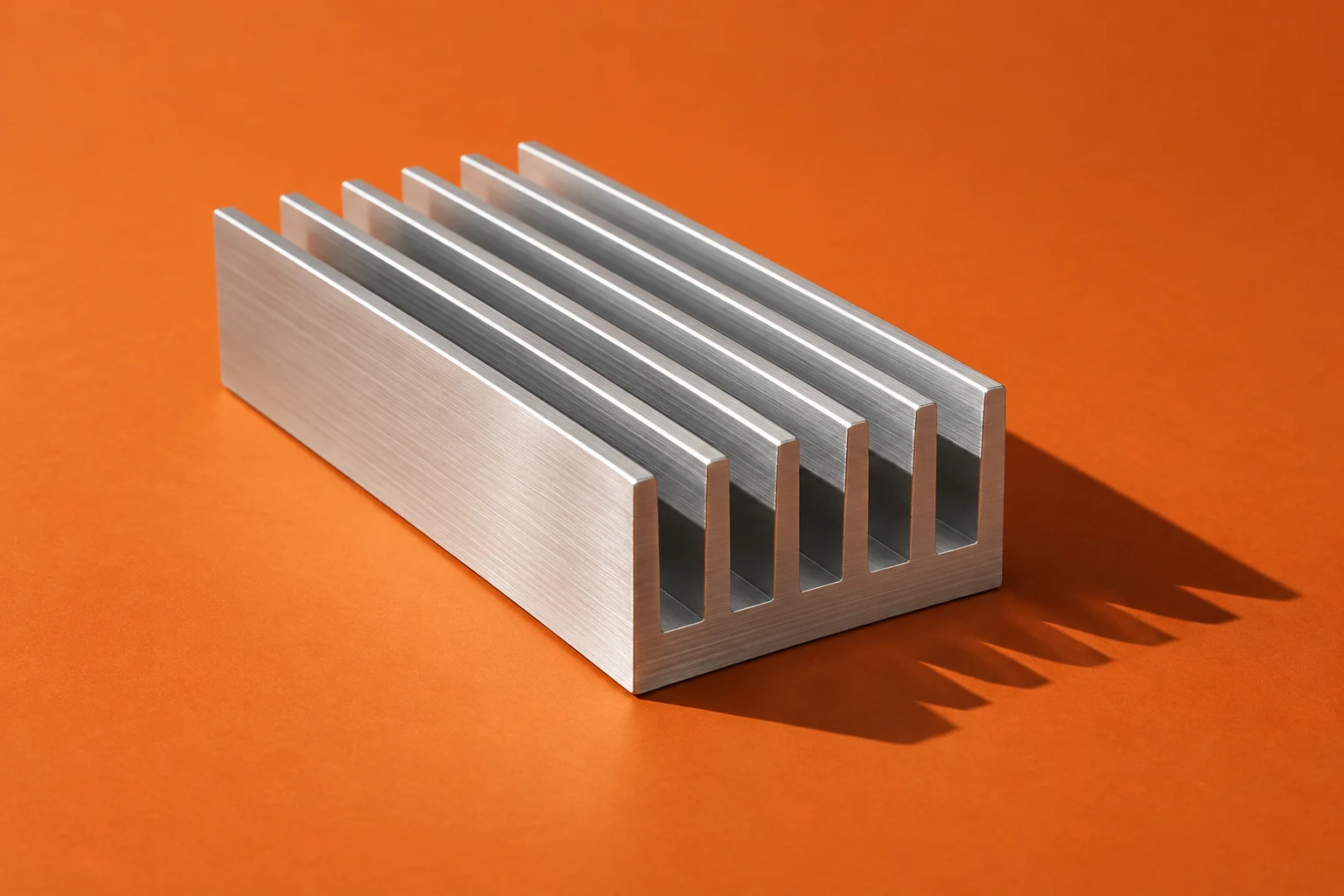
Parallel fins give the sample its rhythm; brushed faces catch the light. A starting point for exploring an enclosure or lighting component.
SPECIMEN DATA IS ILLUSTRATIVE. NOT A CERTIFIED ENGINEERING SPECIFICATION.
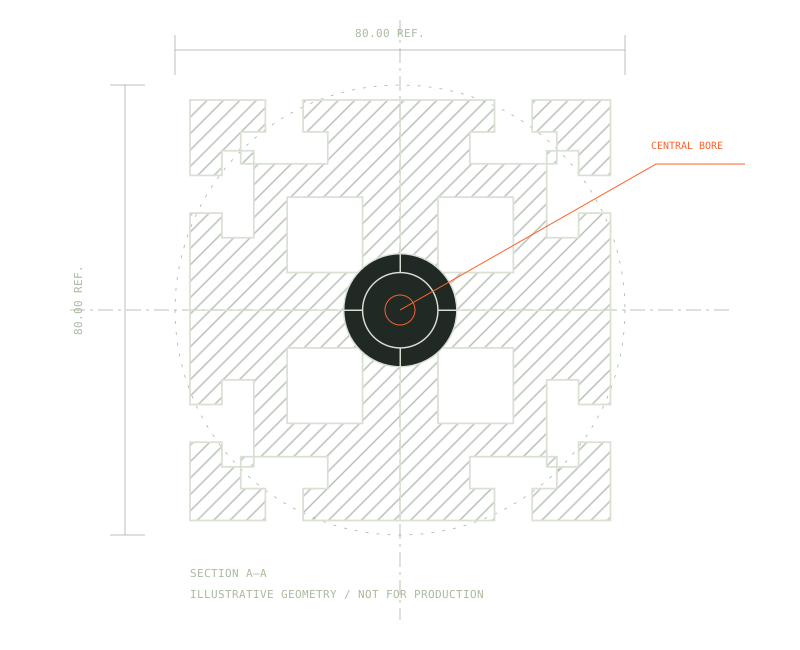
Switch between the section and isometric views. Trace the outer channels and central opening to see how the profile is arranged.
The T-shaped slots repeat along the outer edges. In this drawing, they show where a matching fixing could meet the profile.
The section view reveals the central opening and the walls around it. Compare it with the isometric view to follow the same shape along its length.
Broad outer faces catch the light; recessed channels stay darker. That contrast helps separate the edges in the drawing.
What does it need to do? Where will it live? Every useful object starts with a better question.
Balance surface, structure and process. Let the character of the material inform the form.
The edge. The connection. The finish. Check each one against the way the object will be used.
Download a text card with your selected material, finish, process and suggested uses. Keep it with your project notes.
Current selection: AL—01 / Aluminium